 Calcium Lab
Written by Jake @ CaLab • September 7, 2026
I had a Chobani peach drink on my desk. The label said 220 calories, 30 g protein. Reading it took one second.
Then I searched for it in MyFitnessPal. Nine entries came back. One was hidden behind an ad for a robot dog.
None of them was my drink.
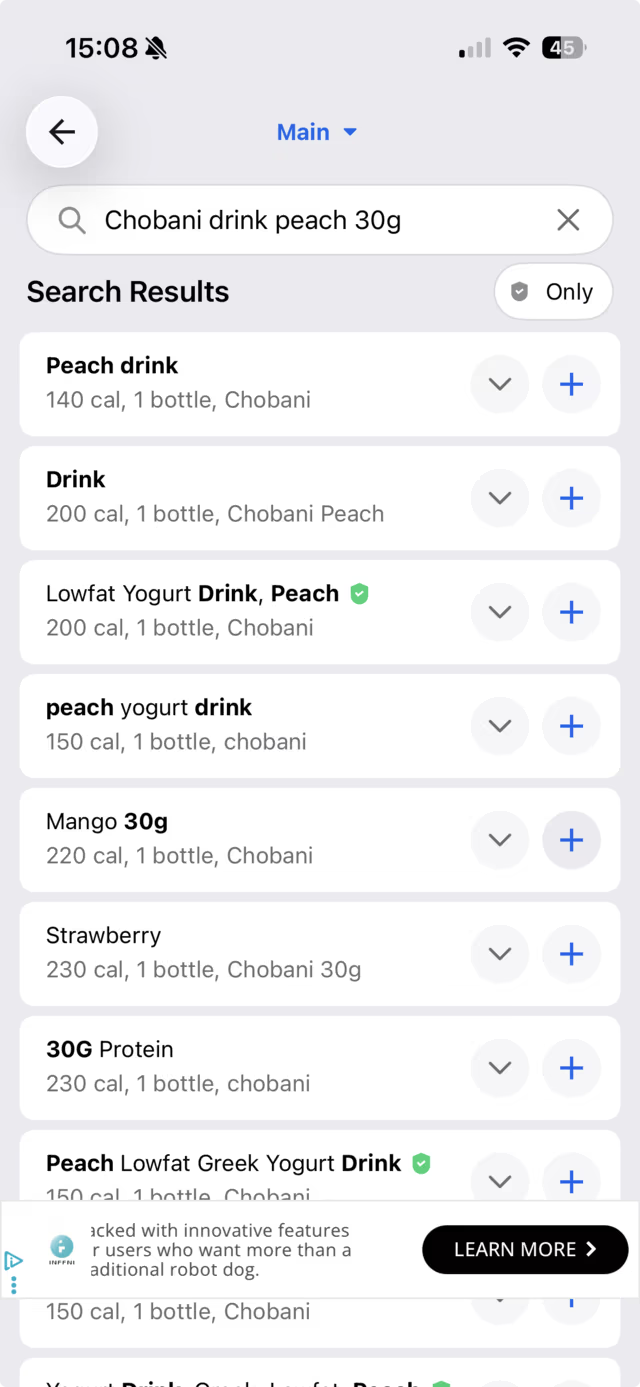
What came back
Drink, Chobani Peach ....................... 200 cal
Lowfat Yogurt Drink, Peach ✅ ............... 200 cal
peach yogurt drink, chobani ................ 150 cal
Mango 30g, Chobani ......................... 220 cal
Strawberry, Chobani 30g .................... 230 cal
30G Protein, chobani ....................... 230 cal
Peach Lowfat Greek Yogurt Drink ✅ .......... 150 cal
(hidden behind an ad) ...................... 150 cal
my bottle .................................. 220 cal, 30 g protein
One entry says 220. That one is mango.
The peach ones say 140, 200, 200, 150 and 150. Two have a verified badge. Those two are 50 calories apart.
So I could pick a number I knew was wrong, or type the one I had already read.
Why does MyFitnessPal do this?
Because users typed those entries, not MyFitnessPal. That is what a crowd-sourced database is. It shows you what the crowd wrote down.
Crowds are great at covering everything and terrible at getting it right. You get an entry for almost any food and a promise about none of them.
Nobody is being lazy here. It is just what the method produces. But you are the one left holding it, and you already had the right number.
It is not just one drink
This is the part that wears you down. Not the odd bad search. The small tax on every meal.
I eat Factor meals most weeks. In MyFitnessPal they are often wrong, sometimes missing, and always a dig to find. The macros do not match the sleeve. The calories do not match the macros.
So I read the box anyway. Then I go hunting for an entry that agrees with it. That is two jobs instead of one.
Packaged food is where these databases are weakest. Packaged food is also what most people eat.
Cameras do not fix this
A database does not guess your food. It gives you a pile of answers and makes you choose.
An AI photo app does guess. It looks at your plate and gives you one number with nothing behind it. A camera cannot weigh anything. It cannot see the oil in the pan or the sugar in the sauce. It cannot see under the top layer.
Either way, the number in your log is not the number on your label.
What I built instead
I did not want a better database. I wanted no database in the way.
The label says one number. Type it once. Save it. It is the same every time after, because you put it there. My drink took two seconds and it says 220, because that is what the bottle says.
That is Tallix. It has 13,294 USDA foods built in for restaurant meals and whole foods, and no crowd-sourced entries at all. It is good at restaurants and weak on packaged brands, and it tells you so.
One more thing. In the big trackers, typing your own protein and carbs by hand is a paid feature. That is $79.99 a year. In Tallix it is the whole app, for one payment.
Try it yourself
Grab something from your kitchen. Search it in MyFitnessPal. Compare what comes back to the label in your hand.
Fifteen seconds. That is the whole argument.